- By Shagun
- January 27, 2025

When it comes to Indian sweets, the humble ladoo stands tall as a beloved confection, cherished across generations and regions. These round, sweet delights are a staple during festivals, celebrations, and family gatherings. With a variety of flavors, textures, and ingredients, ladoos are a testament to India’s diverse culinary heritage. Let’s dive into the fascinating world of ladoos and explore the different types that make this mithai so special.
One of the most popular ladoos, besan ladoo, is made with gram flour (besan), ghee, and sugar. The besan is roasted to a golden-brown hue, releasing a nutty aroma that forms the hallmark of this sweet. Often garnished with cardamom and nuts, besan ladoo is a go-to treat during festivals like Diwali and Ganesh Chaturthi.
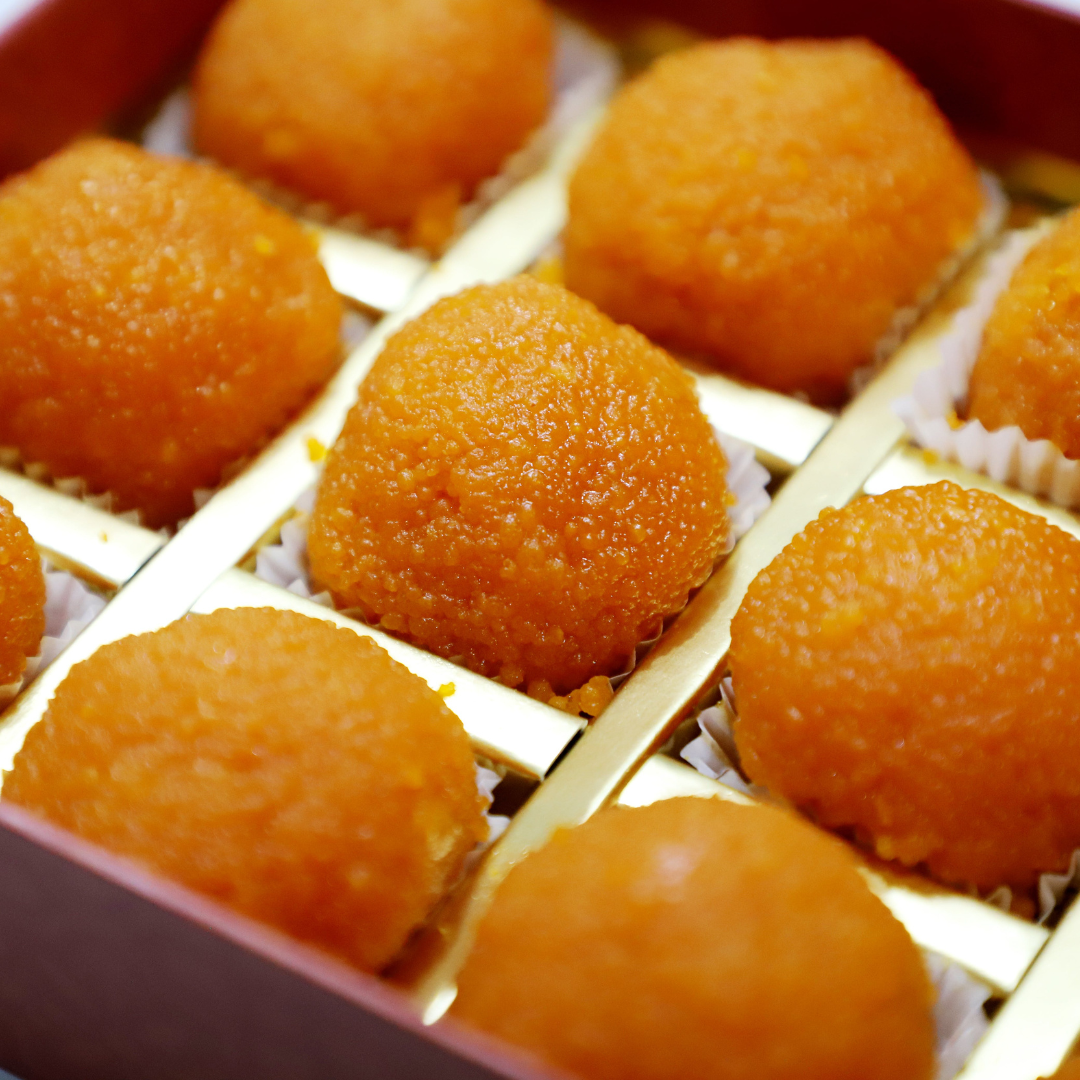
Bright orange or yellow and irresistibly sweet, boondi ladoo is made from tiny fried gram flour pearls soaked in sugar syrup. It is commonly offered as prasad in temples and is an essential part of religious ceremonies. Variants like motichoor ladoo use finer boondi, giving them a smoother texture.
This simple yet delightful ladoo is made with semolina (sooji), sugar, and ghee. Often flavored with grated coconut, cardamom, and dry fruits, rava ladoo is a common treat in South Indian households, especially during festivals like Navratri and Janmashtami.
Coconut lovers rejoice! Coconut ladoo is made using freshly grated or desiccated coconut mixed with condensed milk or jaggery. Popular in coastal regions, these ladoos can be flavored with cardamom or saffron for an extra touch of luxury.
A winter favorite, til ladoo is made from sesame seeds and jaggery. The combination of nutty sesame and caramelized jaggery not only tastes amazing but is also packed with nutrients, making it a wholesome snack.
For those looking for a healthier option, dry fruit ladoo is an excellent choice. Made with dates, figs, and a mix of nuts like almonds, cashews, and pistachios, these ladoos are naturally sweetened and free from refined sugar. Perfect for a quick energy boost!
A nutritious treat, gond ladoo is made with edible gum (gond), wheat flour, ghee, and nuts. These ladoos are especially popular in North India and are traditionally consumed during winter for their warming and health-boosting properties.
Also known as paneer ladoo, malai ladoo is made with fresh chhena (paneer), sugar, and cardamom. Soft, creamy, and mildly sweet, this ladoo is a delicacy often enjoyed during festive occasions.
Made with whole wheat flour, ghee, and jaggery or sugar, atta ladoo is a simple and wholesome sweet. Often prepared for young children and the elderly, it is rich in fiber and provides long-lasting energy.
In rural India, especially during harvest festivals like Makar Sankranti, makka ladoo made from corn flour and jaggery is a seasonal favorite. These ladoos have a distinct earthy flavor and are deeply rooted in tradition.
Combining the tropical goodness of coconut with the rich taste of jaggery, nariyal-jaggery ladoo is a variation of the classic coconut ladoo. This sweet is particularly popular in South India and is often made as an offering to deities.
A unique and slightly bitter ladoo, methi ladoo is made with fenugreek seeds, ghee, jaggery, and spices. It is consumed for its medicinal benefits, particularly to aid digestion and improve joint health.
The diversity of ladoos in India reflects the country’s culinary creativity and the importance of sweets in its culture. From the nutty richness of besan ladoo to the wholesome goodness of til ladoo, there is a ladoo for every palate and occasion. The next time you savor one of these sweet spheres, remember that you’re tasting a little piece of India’s vast gastronomic heritage.